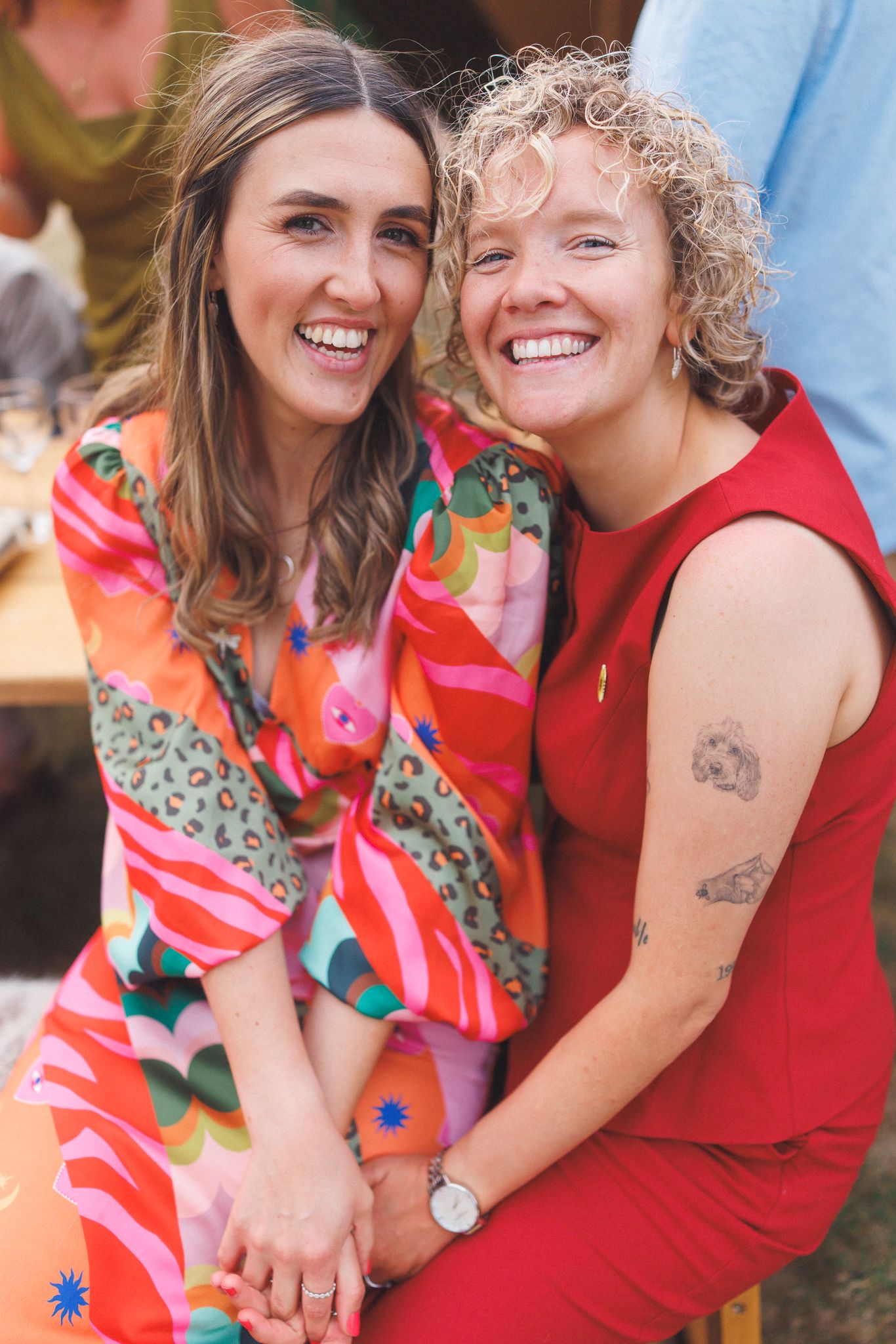
How to support a friend through Baby Loss

Written by Bex & Laura

May 21, 2025

How to support a friend through Baby Loss Image

It is so difficult to know how to support a loved one through the devastating experience of miscarriage and baby loss. Often we don’t know what to say, we don’t know how to bring up the conversation or even whether we should, for fear of causing further upset. We have put together some suggestions to help those outside this community learn how to support women and men through their heartbreak.

From an emotional perspective, we don’t believe that baby loss can be understood unless it has been experienced, but from an educational point of view, we absolutely think that offering the correct support can be learnt. And if we can teach this, if we can help others understand that women and couples need time, space and above all validation, then we must.

Acknowledge the loss

The only way to increase the pain of baby loss is to ignore it.

We understand how difficult the topic of baby loss is to bring up, we know that you fear by mentioning it, you may cause further upset. However, when our baby isn’t acknowledged, we can end up feeling that they only existed to us, and that our grief is disproportionate to our loss, this can leave us unwilling to share what we have been or are going through and isolate ourselves further.

Saying something is, in our experience, always better than saying nothing, if you don’t know what to say, there’s huge power in admitting that ‘I’m so sorry, I don’t know what to say, but I wanted you to know I’m thinking of you and I’m here whenever you need me to be’ this simple phrase will let us know that you care and that you are a safe space as and when we are ready to talk.

Don’t be offended by our boundaries, it’s us, not you

The grieving process is long, complicated and painful. We may need to duck out of social stuff, especially baby related gatherings, we will be desperately worried that we will upset or offend you by doing this, but we are struggling and need to protect ourselves from further heartbreak at this point.

Check in on our partners

Baby loss affects both parents and often our partners don’t feel justified in their grief because the loss for them wasn’t physical. Give them a call or a text, they may want to vent to you if they feel their grief will burden us.

Be in the wings and bring us treats

Don’t try to pull us from our trenches, but when we’re ready to talk, come and join us in them, bring a candle to light the way….and snacks, decent snacks.

Try to avoid ‘toxic positivity’

Toxic positivity is the belief that one should remain positive, even when facing difficult situations or negative emotions. It denies the opportunity to process and work through these challenging (but very natural) thoughts and feelings, instead plastering on an ‘always look on the bright side’ approach which can be really detrimental to the ongoing emotional health of someone who’s suffered.

Toxically positive phrases can include anything starting with ‘at least’ for example, ‘at least it was early’ ‘at least you already have children’ ‘at least you know you can get pregnant’ although these phrases are almost always said with love and consideration, they often make us feel that our experience weren’t as bad as  we’re making out, or that our grief isn’t valid. Phrases also include ‘It wasn’t meant to be’ ‘It was God’s plan’ etc. etc. 

Good examples of what to say to avoid using the ‘at least phrases’

I’m so sorry this has happened, I’m thinking of you

I’m so sorry, I know how much you wanted this

I just wanted to tell you I’m here for you whenever you need to talk

Reflect the language used

When we lose a baby, we are completely out of control of what has happened, this loss of control is really difficult to cope with and manage, we need to be given the opportunity to own and share our story in a way that feels right to us, often language is a big part of that and we choose how we reflect on our narrative with care, so when speaking to someone about what has happened, carefully reflect the language they have chosen back, if they use their baby’s name, do the same, if they refer to their experience as a miscarriage, use the same term, this can help us feel like you’re listening, you’ve heard and you understand us.

Remember dates and seasons

Milestones are particularly hard when you’ve lost a baby, you feel as though the whole world moves on and you’re stuck behind grieving, this grief often becomes heavier around seasonal events like Christmas and Mothers Day, as well as milestones like due dates and loss anniversaries.

There are other less obvious triggers too, halloween for example, when social feeds are full of babies sat in carved out pumpkins or September, when we see multiple images of school clothed children on their front door steps. I

If you remember the time of year a loved one lost at, or you notice that your socials are filled with Christmas matching pyjamas, sending a text along the lines of ‘I know this time of year must be difficult for you, I’m thinking of you’ will be so gratefully received.

Continue to be there

Baby loss is not an event to be gotten over, it’s an experience that has to be woven into our existence and although feelings and emotions will change over time, the scar will always remain. Remembering to check in from time to time is a great way to show you haven’t forgotten and that you are aware that grief is not a short or linear journey.

Be sensitive and inclusive

Hearing the happy news of others in the way of pregnancy announcements can be very difficult news for us to take onboard and it’s extremely helpful when consideration is taken in how these announcements are made, it’s not about dulling down anyone else’s joy, but being inclusive to those who may be struggling with the burden of infertility and loss. We have found from speaking to hundreds of members of our community, that a text message, WITHOUT an ultrasound photo attached is often the best way forward – this allows us to process the information in our own time and formulate the response that you deserve, rather than a face to face announcement, where we may feel like a rabbit caught in headlights and be unable to give a response we’d like to.

Real voices,
real impact

Baby loss and infertility can feel isolating, but you’re not alone here. Hear from those who’ve found support, strength, and community with us.

“I’ve gotten more out of these sessions than I have in months of therapy. I am so so grateful for you guys. Truly. xo”

-Sammi, TFMR course attendee 🇺🇸

“This challenge has really helped me to feel like I’ve found my tribe & the people that just get me 🥰. It’s been so much more than just training for a run ❤️.”

-Edwina, Run 10k to Raise 10k participant

‘The chat is a lifeline! Baby loss can make you feel so isolated but, connecting with others who have been there makes it that bit more bearable xx”

Warriorship drop-In support call attendee

“Just a huge thank you from the bottom of my heart. A friend gave me your book a few days after my TFMR and reading it scraped me off the emotional floor. It validated all of the contradictory emotions I was feeling and made me feel so much less alone.”

Harri, Reader of the TWGGE survival guide

“I have never felt more connected on a deeper level emotionally, more understood, validated, and respected than with this amazing group of women who sadly like myself have been through the shittest time with fertility/baby loss. “

Baby loss support course attendee

“It would be no exaggeration to say this podcast has been a lifeline for me over the past couple of months and has seen me through some dark days. I’m so grateful to have found this community of women who are so funny, inspiring and knowledgeable. It makes me feel less alone.”

AshSunny87, Podcast listener

“Almost 4.5 years since I joined this god awful gang… but the worst girl gang ever is the best girl gang for support ❤️ thank you for helping so many lost and helpless women in their dark times! I don’t know how I found you but I’m so grateful for you both 🙌 you may never know how much I need you”

Instagram follower

Managing Trying to Conceive in the Workplace

Written by Bex & Laura

May 21, 2025

Managing Trying to Conceive in the Workplace Image
We spend so much of our time in the workplace and it can be an incredibly triggering place to be, particularly when you don’t feel supported or understood by colleagues and management.

We’ve put together a guide to help you manage challenging conversations and difficult situations.

When you’re trying to conceive, it’s easy to start to feel as if you are losing control of what is happening to you.

One of the best ways to regain some of that control is to be well-informed, the more you know about your own fertility, the more empowered you will feel.

Building a family is a fundamental part of many lives which can have a devastating impact to those whose journey isn’t easy. Sadly, the reality of this challenge is rarely recognised and often misunderstood by employers and as a result, many people suffer in silence.

Some top tips for dealing with work while you are TTC and some advice about how you can get your employer to support you.

Check the policies

Are you allowed time off for medical appointments or can they offer you flexible working?

Be proactive in offering solutions

Managing workload/advanced notice of appointments – schedule a chat with your line manager or HR to explain what you are going through, it’s an emotive subject to talk about so prepare some notes to help you talk through everything

Treatment regimes and protocols

You may well need to inform and educate your employer about some of this because the likelihood is they will have no clue – be clear about who you want to be privy to this information

Look at what support is available to you

Make yourself aware of any additional support options available, such as Occupational Health or counselling services Of course you don’t actually have to tell your employer anything if you don’t want to but bear in mind that it’s easier to get help from them if they know what is happening.

If you are having fertility treatment, check out the Fertility Matters At Work Website (https://fertilitymattersatwork.com) for more advice, guidance and info for both you and your employer.

Real voices,
real impact

Baby loss and infertility can feel isolating, but you’re not alone here. Hear from those who’ve found support, strength, and community with us.

“I’ve gotten more out of these sessions than I have in months of therapy. I am so so grateful for you guys. Truly. xo”

-Sammi, TFMR course attendee 🇺🇸

“This challenge has really helped me to feel like I’ve found my tribe & the people that just get me 🥰. It’s been so much more than just training for a run ❤️.”

-Edwina, Run 10k to Raise 10k participant

‘The chat is a lifeline! Baby loss can make you feel so isolated but, connecting with others who have been there makes it that bit more bearable xx”

Warriorship drop-In support call attendee

“Just a huge thank you from the bottom of my heart. A friend gave me your book a few days after my TFMR and reading it scraped me off the emotional floor. It validated all of the contradictory emotions I was feeling and made me feel so much less alone.”

Harri, Reader of the TWGGE survival guide

“I have never felt more connected on a deeper level emotionally, more understood, validated, and respected than with this amazing group of women who sadly like myself have been through the shittest time with fertility/baby loss. “

Baby loss support course attendee

“It would be no exaggeration to say this podcast has been a lifeline for me over the past couple of months and has seen me through some dark days. I’m so grateful to have found this community of women who are so funny, inspiring and knowledgeable. It makes me feel less alone.”

AshSunny87, Podcast listener

“Almost 4.5 years since I joined this god awful gang… but the worst girl gang ever is the best girl gang for support ❤️ thank you for helping so many lost and helpless women in their dark times! I don’t know how I found you but I’m so grateful for you both 🙌 you may never know how much I need you”

Instagram follower

How to deal with the Ugly Feelings

Written by Bex & Laura

May 21, 2025

How to deal with the Ugly Feelings Image

Does this happen when you see a pregancy announcement?

1. You feel like shit

2. You feel like shit for feeling like shit

3. You obsess about feeling like shit.


Yes? congratulations… You are completely normal.


When our baby dies or we are struggling under the burden of infertility, we find ourselves consumed by grief, our loss is all we can think of, it is suffocating and painful and the world can become a very dark and frightening place.

As we start to catch our breath and find our feet, as we get used to the unpredictability of our grief, often we are completely floored again by a new set of feelings – feeling that weren’t there before, feelings that, perhaps, we’re not even familiar with – cue anger, resentment, jealousy, bitterness and despair.

Welcome to the ugly feelings.

Often we find this array of emotion hard to accept ourselves, let alone admit to anyone else… As we knock back £100’s worth of vitamins, chow down on antioxidants & and chug gallons of unicorn piss we hear about women who accidentally get pregnant despite incompatible lifestyle choices.

We plead with higher powers in the hope that one day we will hold a baby in our arms, meanwhile hearing of unwanted pregnancies – words banded round like ‘mishap’ ‘accident’ and ‘mistake’ our hearts burn with both longing and anger.

While we don’t wish loss on anyone, we cannot feel the joy we were once able to.

When we see pregnancy announcements on social media, instead of happiness we feel a tidal wave of emotion. We feel things that make us ashamed of ourselves… anger, hatred even and then comes the guilt… How can we feel this way? We must be a terrible, awful, monster-woman. We’re not, We are, in fact, completely normal, as are all our feelings. So what do we do? How do we cope? Read on friends, read on.

1. Don’t get caught up, If you dwell on these feelings they will consume you.

We spend so much time and energy trying to stop ourselves from feeling this way. It’s like that thing about elephants… you know? Someone says ‘don’t think about an elephant…’ what do you then think of? Anyway, elephants or no elephants, these feelings are NATURAL AND VALID, when they come, acknowledge them let them potter round for a bit and then think about something else.

Once again – it is normal – you are normal. Allow yourself to feel this way and accept that the ugly feelings will come and go.

Having ugly feelings does not make you an ugly person.

2. Tell people what you need.

Friends and family members who haven’t experienced baby loss won’t necessarily know how to share pregnancy news with you. We have found that a face-to-face announcement is the hardest way to hear this as it can catch us like a rabbit in headlights; our facial features and voice suddenly feel as though they belong to someone else.

In this situation, it is very unlikely we will have the ability to keep our shit together.

In our personal experience a text message is the best way forward. It allows us the time to process how we feel, deal with the ugly feelings and then prepare our response. Remember; you’re not making their news about you – you’re protecting yourself & your relationships.

3. Take a step back It’s 100% okay to protect yourself and your emotions.

In fact it’s not just okay, it absolutely necessary. Sometimes we need to withdraw slightly to create some space between ourselves and the people or situations that can trigger our ugly feelings.

In order to maintain good mental health, it’s important to have boundaries in place; mute the Whatsapp group, decline the baby shower invite, unfollow pregnant friends on socials. Remember, these are your friends, they will understand – if they don’t. Send them our way, we’ll duff them right up… No, joking – if they don’t understand then a little distance from them is even more important.

4. We are your people

Sharing your ugly feelings with those who haven’t experienced baby loss can be challenging and ultimately, if they don’t understand, can make you feel worse. The baby loss community is huge and so kind and supportive, we are your people, use us. It’s so bloody liberating to share how seeing a pregnant stranger in the fruit & veg section at Tesco made you want to lob a grapefruit at her, or how you saw red when Angela announced her pregnancy on FB by saying ‘Much to Steve’s annoyance we got pregnant the first month of trying. Lol’ LOL ANGELA, LO-FUCKING L.

So, in summary –

• Ugly feelings do not make you an ugly person

• Take control of the situation if you can

• Muting, unfollowing and turning down invites is AOK

• Tell us how you’re feeling.

You’ve got this & we’ve got you

Bex & Laura xxx

Real voices,
real impact

Baby loss and infertility can feel isolating, but you’re not alone here. Hear from those who’ve found support, strength, and community with us.

“I’ve gotten more out of these sessions than I have in months of therapy. I am so so grateful for you guys. Truly. xo”

-Sammi, TFMR course attendee 🇺🇸

“This challenge has really helped me to feel like I’ve found my tribe & the people that just get me 🥰. It’s been so much more than just training for a run ❤️.”

-Edwina, Run 10k to Raise 10k participant

‘The chat is a lifeline! Baby loss can make you feel so isolated but, connecting with others who have been there makes it that bit more bearable xx”

Warriorship drop-In support call attendee

“Just a huge thank you from the bottom of my heart. A friend gave me your book a few days after my TFMR and reading it scraped me off the emotional floor. It validated all of the contradictory emotions I was feeling and made me feel so much less alone.”

Harri, Reader of the TWGGE survival guide

“I have never felt more connected on a deeper level emotionally, more understood, validated, and respected than with this amazing group of women who sadly like myself have been through the shittest time with fertility/baby loss. “

Baby loss support course attendee

“It would be no exaggeration to say this podcast has been a lifeline for me over the past couple of months and has seen me through some dark days. I’m so grateful to have found this community of women who are so funny, inspiring and knowledgeable. It makes me feel less alone.”

AshSunny87, Podcast listener

“Almost 4.5 years since I joined this god awful gang… but the worst girl gang ever is the best girl gang for support ❤️ thank you for helping so many lost and helpless women in their dark times! I don’t know how I found you but I’m so grateful for you both 🙌 you may never know how much I need you”

Instagram follower

The 5 Senses Meditation

Written by Tahnee Knowles

May 20, 2025

The 5 Senses Meditation Image

Meditation is a great way to calm the nervous system and centre yourself. Use meditation when you’re feeling anxious, stressed or you need to unwind to go to sleep.

This meditation is designed to bring awareness to the present by observing what is happening in the here and now using all 5 senses.

Before listening to the meditation, if you have a calming fragrance, like lavender or sage have it to hand and get yourself a glass of water.

Now, sit back and relax…


Real voices,
real impact

Baby loss and infertility can feel isolating, but you’re not alone here. Hear from those who’ve found support, strength, and community with us.

“I’ve gotten more out of these sessions than I have in months of therapy. I am so so grateful for you guys. Truly. xo”

-Sammi, TFMR course attendee 🇺🇸

“This challenge has really helped me to feel like I’ve found my tribe & the people that just get me 🥰. It’s been so much more than just training for a run ❤️.”

-Edwina, Run 10k to Raise 10k participant

‘The chat is a lifeline! Baby loss can make you feel so isolated but, connecting with others who have been there makes it that bit more bearable xx”

Warriorship drop-In support call attendee

“Just a huge thank you from the bottom of my heart. A friend gave me your book a few days after my TFMR and reading it scraped me off the emotional floor. It validated all of the contradictory emotions I was feeling and made me feel so much less alone.”

Harri, Reader of the TWGGE survival guide

“I have never felt more connected on a deeper level emotionally, more understood, validated, and respected than with this amazing group of women who sadly like myself have been through the shittest time with fertility/baby loss. “

Baby loss support course attendee

“It would be no exaggeration to say this podcast has been a lifeline for me over the past couple of months and has seen me through some dark days. I’m so grateful to have found this community of women who are so funny, inspiring and knowledgeable. It makes me feel less alone.”

AshSunny87, Podcast listener

“Almost 4.5 years since I joined this god awful gang… but the worst girl gang ever is the best girl gang for support ❤️ thank you for helping so many lost and helpless women in their dark times! I don’t know how I found you but I’m so grateful for you both 🙌 you may never know how much I need you”

Instagram follower

Controlling the Controllables

Written by Bex & Laura

May 20, 2025

Controlling the Controllables Image

Control the controllables is one of our favourite sayings here at TWGGEF, often we spend so much time worrying about things that are completely our of hands, we spiral into negativity and can become extremely anxious. If we can redirect our energies into things we have control over, we will start to feel calmer, with a better understanding of where we are.

The world around us is has only two major factors – things we can control and things we can’t control.

Below we demonstrate our ‘circle of control’, a theory by Stephen R Covey (author of book 7 habits of highly effective people – well worth a read btw).

We have a ‘circle of concern’ a ‘circle of influence’ and a ‘circle of control’ The circle of concern is everything that you might worry about but have no control over whatsoever, for example – the weather. Next we have the circle of influence – this can be things like whether or not you pass an exam, you have influence (i.e. you can study) however you do not have complete control over the result. Then we have the circle of control – what you eat, what time you go to bed, how much you look at social media – these are all things you have COMPLETE control over – very black and white that one.

The idea is that you let go what’s in the circle of concern and instead focus on the circle of control. CONTROL THE CONTROLLABLES!!!

By creating a visual representation, we can input our own concerns and worries & focus on the stuff that we can do something about.

We’ve created a generic one for you & then there’s a blank worksheet for you to print and fill in yourself.

Think about where to put things like ‘other people’s pregnancy announcements’ and ‘self care’

Remember, control what you can, let the other shit go….

Blank worksheet linked below to print out, fill in and stick on the fridge!

COC worksheet

Real voices,
real impact

Baby loss and infertility can feel isolating, but you’re not alone here. Hear from those who’ve found support, strength, and community with us.

“I’ve gotten more out of these sessions than I have in months of therapy. I am so so grateful for you guys. Truly. xo”

-Sammi, TFMR course attendee 🇺🇸

“This challenge has really helped me to feel like I’ve found my tribe & the people that just get me 🥰. It’s been so much more than just training for a run ❤️.”

-Edwina, Run 10k to Raise 10k participant

‘The chat is a lifeline! Baby loss can make you feel so isolated but, connecting with others who have been there makes it that bit more bearable xx”

Warriorship drop-In support call attendee

“Just a huge thank you from the bottom of my heart. A friend gave me your book a few days after my TFMR and reading it scraped me off the emotional floor. It validated all of the contradictory emotions I was feeling and made me feel so much less alone.”

Harri, Reader of the TWGGE survival guide

“I have never felt more connected on a deeper level emotionally, more understood, validated, and respected than with this amazing group of women who sadly like myself have been through the shittest time with fertility/baby loss. “

Baby loss support course attendee

“It would be no exaggeration to say this podcast has been a lifeline for me over the past couple of months and has seen me through some dark days. I’m so grateful to have found this community of women who are so funny, inspiring and knowledgeable. It makes me feel less alone.”

AshSunny87, Podcast listener

“Almost 4.5 years since I joined this god awful gang… but the worst girl gang ever is the best girl gang for support ❤️ thank you for helping so many lost and helpless women in their dark times! I don’t know how I found you but I’m so grateful for you both 🙌 you may never know how much I need you”

Instagram follower

Journal Prompts

Written by Bex & Laura

May 20, 2025

Journal Prompts Image

We both find writing so therapeutic and helpful to process emotions and make sense of our thoughts and feelings. Journalling is a way to express yourself without fear of judgement and we hope that you get as much out of putting pen to paper as we have done and continue to do. Here are some journal prompts. We want you guys to be as honest with yourselves as possible – write as if no-one else will ever read it.

1. Write something to your teenage self about baby making. 

Have a think about what you would say to prepare your younger self for what may lay ahead. Be realistic but be sensitive and kind.

2. Write a letter to your baby

be they already here with us, gone too soon, never made it to Earth or yet to be created.

3. Write something to your partner. 

Maybe it’s something that you would like to give them once it is finished or maybe you’d rather keep it to yourself. Either option is okay. It’s also possible that your partner might want to write a letter to you. Do whatever suits you, there is no pressure. The whole idea is based around processing our feelings and being able to make sense of all that goes on in our mind.

4. Write something to your future self. 

Write it, seal it and choose a date when you would like yo open it. Maybe in 1 year, when you have your baby in your arms or even a letter to yourself for Christmas Day. It’s an emotional task but it should be quite therapeutic. So get the tissues, make a cuppa and let the words flow.

5. Write a letter to your body.

What would you say to your heart, your brain, your uterus? Okay so this is a bit more ‘out there’ and might take you a little while to get started but once you do the words will flow.

6. Write down everything that you do in a day. 

What made you happy and what didn’t? Is there anything that didn’t make you feel good that you can do less or not at all or maybe just at a different time or share the load? Do more of what makes you feel good!

7. Write the story of you, 

Or more specifically the story of your relationship. Think about how you met, milestones you have reached, difficulties you’ve been through. How has your relationship evolved? How have your feelings changed?

8. Write a letter to someone in your life that you admire or respect. 

Explain how they have shaped you, what they’ve taught you & how they have made your life better. Up to you whether you send it or not – writing letters of appreciation can be uplifting and give us gratitude, but if you’re not in the right headspace, keep this one in your back pocket.

9. How am I doing? 

How are you doing really? What are you struggling with? How are you feeling? What are your triggers?

10. How would I describe myself to a stranger?

Pretend you’ve made a good old fashioned pen pal and describe yourself to them, your likes and dislikes, hobbies, character attributes; you remember the ‘personal statement’ you had to write in year 11?! channel that!

Real voices,
real impact

Baby loss and infertility can feel isolating, but you’re not alone here. Hear from those who’ve found support, strength, and community with us.

“I’ve gotten more out of these sessions than I have in months of therapy. I am so so grateful for you guys. Truly. xo”

-Sammi, TFMR course attendee 🇺🇸

“This challenge has really helped me to feel like I’ve found my tribe & the people that just get me 🥰. It’s been so much more than just training for a run ❤️.”

-Edwina, Run 10k to Raise 10k participant

‘The chat is a lifeline! Baby loss can make you feel so isolated but, connecting with others who have been there makes it that bit more bearable xx”

Warriorship drop-In support call attendee

“Just a huge thank you from the bottom of my heart. A friend gave me your book a few days after my TFMR and reading it scraped me off the emotional floor. It validated all of the contradictory emotions I was feeling and made me feel so much less alone.”

Harri, Reader of the TWGGE survival guide

“I have never felt more connected on a deeper level emotionally, more understood, validated, and respected than with this amazing group of women who sadly like myself have been through the shittest time with fertility/baby loss. “

Baby loss support course attendee

“It would be no exaggeration to say this podcast has been a lifeline for me over the past couple of months and has seen me through some dark days. I’m so grateful to have found this community of women who are so funny, inspiring and knowledgeable. It makes me feel less alone.”

AshSunny87, Podcast listener

“Almost 4.5 years since I joined this god awful gang… but the worst girl gang ever is the best girl gang for support ❤️ thank you for helping so many lost and helpless women in their dark times! I don’t know how I found you but I’m so grateful for you both 🙌 you may never know how much I need you”

Instagram follower

The Isolation of Loss: Becoming That Statistic More Than Once

Written by Louise Kay

May 14, 2025

The Isolation of Loss: Becoming That Statistic More Than Once Image

Louise shares her deeply personal experience of miscarriage, recurrent baby loss, and TFMR, shedding light on the isolation so many families feel. A powerful reminder that behind every statistic is a real story — and a need for better baby loss support.

Everything started for us back in January 2018, we decided in the December we’d start trying & found ourselves pregnant after the first month.

I remember being upset but I’d heard miscarriage was common, 1 in 4 & thought that was just our 1.

It was only about a week after finding out that we were pregnant that I started cramping & within 24 hours was miscarrying.It was a bit of a blur at the time, we hadn’t really gotten our heads around being pregnant & what that meant before it was over. I remember being upset but I’d heard miscarriage was common, 1 in 4 & thought that was just our 1.

We got pregnant again a few months later & happily brought our little boy, Theo into the world following a relatively straightforward pregnancy. Just over a year later we decided to try for number 2, we fell pregnant within a couple of months in the first Covid lockdown. I was sick, all the usual first trimester symptoms, we got past that 6-week mark & naively the prior miscarriage was a forgotten blip.

I was just over 10 weeks pregnant & despite not being far from our 12-week scan, I decided to buy my husband a private scan for his birthday, it was the middle of Covid so it seemed like something that would make the day memorable. I lay on the table wondering if I’d managed to fill my bladder enough as I felt so sick I wasn’t drinking much, we were just chatting away as the sonographer put the scan up. I don’t remember exactly how things went after that but I do remember almost feeling like I was being told off, why had I not realised something was wrong, I must have got my dates wrong because the foetus was only 8ish weeks in size. A total lack of compassion & sign posting to an EPU. We were devastated.

We opted for a medical procedure following that. It took a lot longer for me to pass the baby than expected, a few days after the medicine I had these intense cramps and ran to the bathroom, before I could get to the toilet, what I now realised was the baby literally fell out of me on to the floor, the size of a big tampon there on the floor. I stared at it not knowing what to do, then picked it up and flushed it down the loo. No one prepares you for that.

Now we were 1 in 20-100 having a missed miscarriage. Following that we had 2 further early losses at 6-7 weeks. It was the darkest time in my life, we withdrew, it wasn’t hard, we were still in Covid so we could avoid people. We struggled to get any help with the NHS because we already had a child. I just had some blood tests & an ultrasound, when they didn’t find anything (after a possible cancer scare that turned out to be a highly incompetent doctor) we were discharged. I remember asking can I access any mental health support given what we’ve been through & was told there are long waiting lists you should just try going private.

The one thing that has remained true throughout our story is the complete lack of support available to families in these situations. I’ve got to the stage where I think I’m crazy for expecting more. After 4 miscarriages we were now 1 in 100, ticking the recurrent miscarriage box too. We ended up seeing a private doctor who was so brilliant, we are very fortunate that we were able to afford her support & I truly believe we have our 2nd son, William, because of her brilliance. She prescribed us with progesterone pessaries that I have taken in all my subsequent pregnancies and I’ve not miscarried again. I have a feeling that so many women would benefit from this intervention & not have to go through all this pain but it’s not always accessible on the NHS which is devastating. With William, again our pregnancy was relatively straight forwards, we were blessed.

That brings us to last year, it took us a long time to decide whether to try for a 3rd but in March 2024 we made the decision & got pregnant that first month of trying. It all felt too easy, how could this be? I was 38 now, we had so much loss before, surely, we weren’t just going to have another baby because we wanted it. I don’t know why I had that underlying feeling but we had scans at 7 weeks, 10 weeks, 12 weeks, my cervix was checked at 16 weeks & I saw our baby moving around, we were in the safe zone we thought as all our other losses had been before 11 weeks. At 18 weeks I expected to start to feel movement, I knew I had around that point with the boys. It didn’t come, I tried not to freak out, I knew I could have an anterior placenta or maybe my memory was a bit off but by 19 weeks I was preoccupied with the thought that I had a dead baby inside me. We were on holiday in Portugal at the time but the minute we got home I went to pregnancy unit & they listened in. To my disbelief they found a heartbeat & told me “That sounds like a happy healthy baby, you probably have got an anterior placenta, don’t worry, your 20-week scan is only a week away”. My husband wanted to see the baby regardless so we booked a private scan the next day to find out the baby’s sex with the boys as they wouldn’t be able to come to the NHS scan. It was a little girl!

When we left, I looked at the papers, she was <1st percentile on some measurements. That’s when our world started to fall apart.

After the scan the sonographer pulled me aside & asked if the boys had been very small babies. I said not abnormally small; Theo had been 5th percentile but William bigger. She said she wanted to share the results with the midwife as she was concerned. When we left, I looked at the papers, she was <1st percentile on some measurements. That’s when our world started to fall apart.

The NHS would not see us before our scheduled 20-week scan 5 days later. We sat in that waiting room with these happy round bellied women for what felt like forever. I was shaking & crying on the bed as she took the scan, and she said “I agree with the private scan but also the baby’s thorax is the wrong shape. You need to go to foetal medicine.”

We were taken to a private waiting room & ushered out the back door. It took a couple of days to get in to foetal medicine, during this time we had no idea what was going on, what range of outcomes we were looking at from survival & everything is ok to losing the baby. It was a total head f***. Meanwhile trying to pretend to the boys like we were ok & not knowing what to tell them as they grew more excited about having a baby sister. I was so scared to tell the boys, but surprisingly that was one of the easier parts about the whole ordeal.

The foetal medicine appointment was horrendous, we were scanned for over an hour, we didn’t look at the screen, we couldn’t. Eventually they took us into a room & told us what they thought was wrong with our little girl. I can so vividly see the doctor saying to me, “many people would choose to terminate based on these results”. I can see her face, the room, hear those words. The worst moment of my life.

We decided we wanted more certainty so had the amniocentesis the same day & went home. To say that we then felt abandoned at this point is the only way I can describe the next 3 and a bit weeks. I trapped myself inside not wanting anyone to see me & work out I was pregnant, for me to have to tell them I was but things weren’t looking good. We had next to no correspondence from the NHS with the exception of the geneticist calling to explain the tests, then to say she didn’t have Downs’ Syndrome or any of the other more common disorders. We were basically told to contact the midwives when we decided what we were doing- i.e. terminating or looking for palliative care at birth. After 3 weeks & no results we asked for another scan, who knew, perhaps there had been a miracle. The evening before the scan we did get a call from the genetics lab to tell us that the gene they had suspected was fine but they would keep looking for something else. As much as I wanted to suppress it, I had a shred of hope. That was all shattered the next day when the scan revealed she was still tracking very small & it was clear to the doctor she had a form of skeletal issue they just hadn’t pinpointed it yet. Sure enough, we got the call later that day to say they had found the gene & that alongside the scan suggested that the severity of the issue was not compatible with life. I didn’t know it was possible to cry that much.

I had to sign to say, yes you can kill my baby. No one should ever have to do that.

We made the decision that it was in her best interest not to put her through the birth for her to die during or shortly after and that we would go ahead with the termination. A few days later we were booked in. By this point I was over 24 weeks so we would have to have a foeticide, I had to sign to say, yes you can kill my baby. No one should ever have to do that.

2 days later we gave birth to our tiny Georgie. I was so thankful to TWGGEF for the podcasts from others that had been through TFMR. It meant that we did a few personal things such as buying her a little Teddy & taking her a book that we’d read to the boys to read to her etc. and accessed guidance I wasn’t able to find anywhere else nor did the bereavement midwife suggest.

We were a bit scared; how would she look? She was so beautiful & just fit in my hands. The midwife that helped us that day was the most incredible, compassionate woman, thank you Jane for making that day as easy as possible & for really caring for our little girl. I’m crying as I write this.

I’ve had so much anger in my grief, primarily at the lack of emotional or mental health support that has been on offer to us. Apparently, I have been coping too well to access maternal mental health support & numerous charities have either not replied to me or been inaccessible due to the post code of the hospital where Georgie was delivered.

And there we are, one of the 5,000 couples that have a TFMR each year in the UK. There are no statistics for the likelihood of a baby having the gene defect that Georgie had, we’ve finally broken the stats!

I could say so much more but I think I’ve run out of room. Thank you Bex & Laura for all that you are doing to help have our stories heard & improve the care and compassion that women & their families so desperately need. You are incredible. With lots of love x

Real voices,
real impact

Baby loss and infertility can feel isolating, but you’re not alone here. Hear from those who’ve found support, strength, and community with us.

“I’ve gotten more out of these sessions than I have in months of therapy. I am so so grateful for you guys. Truly. xo”

-Sammi, TFMR course attendee 🇺🇸

“This challenge has really helped me to feel like I’ve found my tribe & the people that just get me 🥰. It’s been so much more than just training for a run ❤️.”

-Edwina, Run 10k to Raise 10k participant

‘The chat is a lifeline! Baby loss can make you feel so isolated but, connecting with others who have been there makes it that bit more bearable xx”

Warriorship drop-In support call attendee

“Just a huge thank you from the bottom of my heart. A friend gave me your book a few days after my TFMR and reading it scraped me off the emotional floor. It validated all of the contradictory emotions I was feeling and made me feel so much less alone.”

Harri, Reader of the TWGGE survival guide

“I have never felt more connected on a deeper level emotionally, more understood, validated, and respected than with this amazing group of women who sadly like myself have been through the shittest time with fertility/baby loss. “

Baby loss support course attendee

“It would be no exaggeration to say this podcast has been a lifeline for me over the past couple of months and has seen me through some dark days. I’m so grateful to have found this community of women who are so funny, inspiring and knowledgeable. It makes me feel less alone.”

AshSunny87, Podcast listener

“Almost 4.5 years since I joined this god awful gang… but the worst girl gang ever is the best girl gang for support ❤️ thank you for helping so many lost and helpless women in their dark times! I don’t know how I found you but I’m so grateful for you both 🙌 you may never know how much I need you”

Instagram follower

Navigating Grief and Hope: My Journey to an APS Diagnosis

Written by Laura Anderson

May 7, 2025

Navigating Grief and Hope: My Journey to an APS Diagnosis Image

After the heartbreak of recurrent miscarriages, a diagnosis of Antiphospholipid Syndromebrought long-sought answers—and hope—for a future rainbow baby. This blog explores the pain of loss, the struggle to be heard, and the hope that comes with having answers.

Nothing quite prepares you for that quiet ultrasound— the one with no rhythmic beating. The silence speaks volumes, and it pierces the heart with profound pain. My ears felt like they were ringing with silence. It was too quiet, and my heart began to sink with anticipation—I knew, before anyone said a word.

“I didn’t feel like a ‘1 in 4’ statistic. I felt like my hopes and dreams didn’t have a heartbeat.”

When the tech finally said: “It looks like it’s too early for a heartbeat.” My heart sank even further–I was almost nine weeks pregnant, but my baby was only 6 weeks. I whispered to my husband “It’s okay,” again and again. But really, I was trying to convince myself. At that moment, I didn’t feel like a “1 in 4” statistic. I felt like my hopes and dreams didn’t have a heartbeat. Speaking with the medical team, I assured them I’d gotten a positive test over a month ago. They called it “suspicious” that my baby had no heartbeat, and was measuring behind, but suggested I may have miscalculated my ovulation date.

I thought, Are they not hearing me? I had a positive test over a month ago. I’ve had this appointment scheduled for over a month. Even if I had miscalculated, a three-week difference is far too much. This wasn’t just “suspicious”—my baby was gone,

I asked what it would be like to miscarry at this stage. Their response was “Call us if you start bleeding.” I felt very unheard and underprepared.  They told me to come back for another ultrasound in 10 days.  I felt like I was losing my mind. Why wasn’t anyone truly talking to me? I just wanted someone to tell me what was going to happen, but the only phrases offered were, “It’s suspicious,” and “we can’t call it a miscarriage yet.”

Those ten days were filled with some of the most intense physical pain I’ve ever experienced. I spent nights hunched over in agony. My husband did everything he could to help, but he felt helpless. I assumed I had passed the baby–there were clear signs of miscarriage.

Ten days later, when I returned for the ultrasound, my baby was still there. A tiny, motionless presence. The baby had grown by just one day, and there was still no heartbeat. A different doctor confirmed the miscarriage was imminent. It felt like a cruel roller coaster—I thought the worst part was over, but it wasn’t.

They asked if I wanted to wait another week. I responded with, “I’m in so much pain. I know the baby is gone. Please help me move this along.” We chose to move forward with medication to help complete the miscarriage. I passed my baby peacefully at home after carrying that pregnancy for ten weeks. We named that pregnancy “Our Little Spark.” Because that’s what it was—a beautiful spark of life.

Two months passed. We were still grieving, but something inside me felt ready to try again. To our surprise, we got pregnant on the first try. The joy of expecting our rainbow baby so soon was indescribable!

But just days later—on Pregnancy and Infant Loss Awareness Day—I began to notice signs of another miscarriage. It felt like a cruel twist of fate. A few days later, our fears were confirmed—I was miscarrying again, and I couldn’t believe it.

I had experienced a chemical pregnancy five years earlier, and I thought I understood this pain. But this loss, so soon after the last one, cut even deeper. I was incredibly sad. And the postpartum hormone drop magnified that sadness.

My sister was a great source of comfort during this time and she encouraged me to call the doctor’s office and request a blood panel–and I’m so glad she did.

She didn’t dismiss me. She listened and had compassion for my story and that changed everything.

I made the call to the doctor’s office and included symptoms I had been experiencing on and off since the birth of my son. I had been disregarded by other doctors before when I had brought up these symptoms, so I was concerned they were going to be brushed off again. I’ll never forget the nurse who believed me. I told her everything—about my symptoms, and how I believed they were connected to my losses. She didn’t dismiss me. She listened and had compassion for my story and that changed everything.

She spoke to a doctor, and a few hours later, a blood panel was ordered.

The results showed elevated levels of antiphospholipid antibodies—suggesting a possible autoimmune clotting disorder called Antiphospholipid Syndrome (APS). It’s a condition that can increase risk of pregnancy loss at any gestation, and serious clotting events like strokes and heart attacks in otherwise healthy young people.

To confirm the diagnosis, the test needed to be repeated 12 weeks later. I was stunned. I wasn’t sure what I expected, but it wasn’t this.

Those 12 weeks were filled with anxiety. Every day, I lived in fear of a clotting event. I read story after story of people finding out they had APS—some, like me, through recurrent pregnancy loss. Others didn’t find out until after a late-term loss. And some only learned of it after a major clotting event, like a pulmonary embolism or stroke.

I was terrified. Panic attacks came in waves as I waited for that second round of tests. Anyone who’s been through this process knows—those three months can feel like three years.

When the time came, the second tests showed even higher levels of the antibodies—confirming the APS diagnosis. I was referred to a hematologist and was informed that it was possible to carry a pregnancy to term, but I would need to be on daily Lovenox injections (a blood thinner), aspirin, and undergo close monitoring during pregnancy.

We were relieved to have answers, but the reality of managing a chronic condition and having a higher risk pregnancy was overwhelming. Often, there is no explanation for recurrent loss—just the heartbreaking label of “unexplained.” But in my case, there was an explanation. I am so grateful for that gentle push from my sister and that nurse who believed me. I learned that the right nurse will listen. The right doctor will listen. And there is hope with this condition.

There’s an ache in the quiet spaces where a baby should be, and it weighs on our hearts.

We ended up naming our consecutive loss “Our Little Gift.” Not because we’re grateful to have miscarried again—far from it—but because that pregnancy helped uncover something deeper going on. In that way, it gave us a crucial piece of the puzzle.

Now, we move forward with grief in one hand and hope in the other. Sometimes, I still catch myself staring at the empty chair at our dining table. We have a beautiful little family and a son we absolutely adore, but it still feels like someone is missing. There’s an ache in the quiet spaces where a baby should be, and it weighs on our hearts.

We’re now with a medical team that has experience supporting APS pregnancies, and for the first time in a while, I feel seen. They listen, they don’t dismiss, and they genuinely believe my body can do this. That alone has been a game changer. I’m currently on a daily aspirin while I am waiting for a positive pregnancy test. Once I get a positive test, I will be put on blood thinner injections as well.  I’m so grateful for this fresh start—even knowing no one can promise us a rainbow. All I can do is keep holding on to hope: hope that the protocols will work, and hope that one day, we’ll fill that empty chair.

Real voices,
real impact

Baby loss and infertility can feel isolating, but you’re not alone here. Hear from those who’ve found support, strength, and community with us.

“I’ve gotten more out of these sessions than I have in months of therapy. I am so so grateful for you guys. Truly. xo”

-Sammi, TFMR course attendee 🇺🇸

“This challenge has really helped me to feel like I’ve found my tribe & the people that just get me 🥰. It’s been so much more than just training for a run ❤️.”

-Edwina, Run 10k to Raise 10k participant

‘The chat is a lifeline! Baby loss can make you feel so isolated but, connecting with others who have been there makes it that bit more bearable xx”

Warriorship drop-In support call attendee

“Just a huge thank you from the bottom of my heart. A friend gave me your book a few days after my TFMR and reading it scraped me off the emotional floor. It validated all of the contradictory emotions I was feeling and made me feel so much less alone.”

Harri, Reader of the TWGGE survival guide

“I have never felt more connected on a deeper level emotionally, more understood, validated, and respected than with this amazing group of women who sadly like myself have been through the shittest time with fertility/baby loss. “

Baby loss support course attendee

“It would be no exaggeration to say this podcast has been a lifeline for me over the past couple of months and has seen me through some dark days. I’m so grateful to have found this community of women who are so funny, inspiring and knowledgeable. It makes me feel less alone.”

AshSunny87, Podcast listener

“Almost 4.5 years since I joined this god awful gang… but the worst girl gang ever is the best girl gang for support ❤️ thank you for helping so many lost and helpless women in their dark times! I don’t know how I found you but I’m so grateful for you both 🙌 you may never know how much I need you”

Instagram follower

Pregnancy Yoga

Written by Bex & Laura - with Caroline Smith

May 1, 2025

Pregnancy Yoga Image

Pregnancy After Loss Yoga

Gentle movement. Grounded breath. A soft return to your body.

Pregnancy after loss is unlike any other journey. It’s layered with uncertainty, tenderness, and hope that feels fragile. Moving your body in this season – especially in a yoga space – can feel daunting. Will I be able to keep up? What if I don’t feel connected to my body? What if I don’t want to tell anyone I’m pregnant yet?

We see you. That’s why we’ve created this on-demand yoga offering with Caroline Smith – so you can explore gentle, nourishing movement on your terms, in your own time, without pressure or expectations.

Meet Caroline Smith

Specialist yoga teacher, baby loss mum, and your guide through this practice.

Caroline Smith is a pregnancy and postnatal yoga instructor with over 20 years’ experience – and her own lived experience of baby loss. She teaches from a place of deep empathy, with a trauma-aware and inclusive approach that honours the emotional complexities of pregnancy after loss.

In this short introduction, Caroline shares her story, her philosophy, and why pregnancy after loss yoga is about connection – not performance.

Your Yoga Session

Online Session: Gentle Yoga for Pregnancy After Loss

A grounding, calming session to ease tension and reconnect.

Attending a yoga class in person might feel intimidating – especially after loss. Your body may feel unfamiliar. You may not know your limits, or feel unsure about joining something that requires commitment when you’re still holding your pregnancy gently, cautiously.

This video is here as a soft starting point.

You can watch it once. Or again and again. Move a little or just breathe and listen. This is your space to reconnect with your body and baby – safely and privately.

💫 What to expect in this session:

  • Slow, supportive movements

  • Breathwork to soothe anxiety

  • Gentle stretching to relieve tension

  • No pressure to “perform” or push your limits

  • Trauma-aware language and pacing

This is a taster – an invitation.

You don’t have to be “ready.” You don’t need yoga experience. You just need a quiet moment and a little self-kindness. Caroline’s session will meet you there.

We hope it offers comfort, calm, and a little space to simply be.

Let us know if you’d love more sessions – we’re here to grow this with you.


Real voices,
real impact

Baby loss and infertility can feel isolating, but you’re not alone here. Hear from those who’ve found support, strength, and community with us.

“I’ve gotten more out of these sessions than I have in months of therapy. I am so so grateful for you guys. Truly. xo”

-Sammi, TFMR course attendee 🇺🇸

“This challenge has really helped me to feel like I’ve found my tribe & the people that just get me 🥰. It’s been so much more than just training for a run ❤️.”

-Edwina, Run 10k to Raise 10k participant

‘The chat is a lifeline! Baby loss can make you feel so isolated but, connecting with others who have been there makes it that bit more bearable xx”

Warriorship drop-In support call attendee

“Just a huge thank you from the bottom of my heart. A friend gave me your book a few days after my TFMR and reading it scraped me off the emotional floor. It validated all of the contradictory emotions I was feeling and made me feel so much less alone.”

Harri, Reader of the TWGGE survival guide

“I have never felt more connected on a deeper level emotionally, more understood, validated, and respected than with this amazing group of women who sadly like myself have been through the shittest time with fertility/baby loss. “

Baby loss support course attendee

“It would be no exaggeration to say this podcast has been a lifeline for me over the past couple of months and has seen me through some dark days. I’m so grateful to have found this community of women who are so funny, inspiring and knowledgeable. It makes me feel less alone.”

AshSunny87, Podcast listener

“Almost 4.5 years since I joined this god awful gang… but the worst girl gang ever is the best girl gang for support ❤️ thank you for helping so many lost and helpless women in their dark times! I don’t know how I found you but I’m so grateful for you both 🙌 you may never know how much I need you”

Instagram follower

Grateful and Grieving: The Reality of My Rainbow Pregnancy

Written by Laurie Carey

April 30, 2025

Grateful and Grieving: The Reality of My Rainbow Pregnancy Image

35 weeks into her rainbow pregnancy, the author reflects on the complex emotions of grief after miscarriage. From trauma and guilt to hope and healing, this honest account explores the mental toll of pregnancy after loss.

On 29 January 2025 our first baby would have been due. Instead, I was 22 weeks pregnant with their rainbow brother.

I’ve blinked and I’m now 35 weeks pregnant.

Can we talk about the contradiction of grieving a loss whilst pregnant and the absolute brain-f**k it presents?

I already know so much about our rainbow baby. Their name. Their gender. Features of their tiny face. The fact they are a wriggler and love car journeys.

I know we are unbelievably blessed to be in this position and I wouldn’t change it for the world -but can we talk about the contradiction of grieving a loss whilst pregnant and the absolute brain-f**k it presents?

Let me take you back a bit.

I was completely overwhelmed to find I was pregnant in May 2024. Neither my partner or I wanted to call what we were doing ‘trying to conceive’ as we didn’t want to put pressure on ourselves or create disappointment – so it was incredible to see those two blue lines appear.

I could visualise my life as a mother instantly. I’d always known I wanted to be a mother and it was as if my time had come. Everything had fallen into place – or so I thought.

I had the best few weeks, having a wonderful summer. I went to the British Grand Prix and was a bridesmaid at my best friend’s wedding – thinking they were all memories I’d be able to share with our child.

The day before my 12 week dating scan, I started spotting. I’d had a private scan at seven weeks and they’d identified a SCH. After a call to 111, we were told to attend the scan as normal and I convinced myself everything was okay.

Everything was anything but okay as it would turn out. The sonographer found that our baby had died not long after my seven week scan. It was as though the bottom had fallen out of my world. I couldn’t fathom how I had not realised my baby had died. All my precious memories were now tainted by knowing I wasn’t carrying a healthy, growing baby after all. I was living a lie in which I’d failed our baby.

I hate the term ‘missed miscarriage’ because there was no missing what came next. My local Early Pregnancy Clinic did everything they could to support me, but the spontaneous miscarriage that followed not long after was the most traumatic experience of my life. There’s little point beating around the bush! I felt like I was trapped in a nightmare, knowing the outcome with nothing I could do to stop it.

I know that’s ridiculous now – having left a literal trail of blood in my wake!

A week later, after going back to work ‘for some normality’, I suffered a significant bleed caused by retained product. I never knew it was possible to be admitted to A&E as quickly as I was without arriving in an ambulance! I worried the other people awaiting triage might be annoyed with me for jumping the queue! I know that’s ridiculous now – having left a literal trail of blood in my wake! I was fortunate that no issues were found and I was able to continue – and complete – expectant management.

After going from one trauma to another, my brain eventually shut down to the emotion of it all. I couldn’t handle the mass of thoughts, feelings, and reactions – so I didn’t. I became a stoic monolith, deciding I was fine and that was that.

The feeling I couldn’t shake however was that of failure. I had failed to bring that child safely into the world. I felt like I had failed in the primary purpose of being a woman. I had set myself an unspoken goal of having a baby by 30. I was 29 years and 21 days when I lost our baby and I felt like time was ticking away. I couldn’t fail again.

I was fortunate that my period returned promptly, 5 weeks post M-day, and I told my partner I was ready to try again. He tried to talk about whether that was actually true, but I was adamant. He’d coped with the loss by putting all his attention on protecting me, and he didn’t want to cause me any more stress (he’s my hero and forever will be).

We got pregnant again straight away.

There have been a few bumps in the road – a couple of EPC referrals, a fetal medicine consultation – but we’ve hit 35 weeks and baby boy is doing brilliantly.

Physically I’m doing really well, but mentally this second pregnancy has been a challenge.

In some respect, I only started to grieve our angel baby properly in the second half of this rainbow pregnancy.

Everyone around us – family, friends, colleagues, midwives, sonographers, consultants – have treated us so sensitively and offered us buckets of support and care, yet my mind has been going overtime, especially as we approached angel baby’s due date and now as we reach rainbow baby’s due date. In some respect, I only started to grieve our angel baby properly in the second half of this rainbow pregnancy.

I’ve felt grateful for being blessed with a new pregnancy so soon, but guilt that others haven’t been afforded this gift, too.

I’ve felt confusion and doubt as to why our pregnancy experience has been shaped as it has.

I’ve felt joy at seeing our healthy baby on the ultrasound, but anger that we had to experience heartbreak first.

I’ve felt anxiety from knowing anything could go wrong at any time, and annoyance that some parents never have to experience the pain and tainted perspectives caused by baby loss.

I’ve felt panic that our bumps in the road were real issues, but calm that we’ve already overcome the worse once before.

I’ve felt grief that I didn’t have the wonderful experiences I’m having in this pregnancy with my first baby, and shame that not many people even know our first baby existed.

I’ve felt failure I couldn’t carry our first baby, and pride that I’m carrying our second baby.

Ugly feelings, weird feeling, brain-f**k feelings! Grief! If truth be told, I know the extent of my emotional response this time is due to not fully processing what happened last time. And yet, I have felt like my second pregnancy is giving me a chance to grieve and find some peace as I reflect on my first pregnancy.

As I write this, I’m not sure what purpose I want my words to serve. Perhaps to confirm to someone also experiencing the brain-f**k of grief in pregnancy that they are not alone? Perhaps to confess my ugly feelings out loud? Perhaps to admit in public that I am only human and, as hard as I tried to avoid my feelings, succumbing to the brain-f**k has almost been healing?

Real voices,
real impact

Baby loss and infertility can feel isolating, but you’re not alone here. Hear from those who’ve found support, strength, and community with us.

“I’ve gotten more out of these sessions than I have in months of therapy. I am so so grateful for you guys. Truly. xo”

-Sammi, TFMR course attendee 🇺🇸

“This challenge has really helped me to feel like I’ve found my tribe & the people that just get me 🥰. It’s been so much more than just training for a run ❤️.”

-Edwina, Run 10k to Raise 10k participant

‘The chat is a lifeline! Baby loss can make you feel so isolated but, connecting with others who have been there makes it that bit more bearable xx”

Warriorship drop-In support call attendee

“Just a huge thank you from the bottom of my heart. A friend gave me your book a few days after my TFMR and reading it scraped me off the emotional floor. It validated all of the contradictory emotions I was feeling and made me feel so much less alone.”

Harri, Reader of the TWGGE survival guide

“I have never felt more connected on a deeper level emotionally, more understood, validated, and respected than with this amazing group of women who sadly like myself have been through the shittest time with fertility/baby loss. “

Baby loss support course attendee

“It would be no exaggeration to say this podcast has been a lifeline for me over the past couple of months and has seen me through some dark days. I’m so grateful to have found this community of women who are so funny, inspiring and knowledgeable. It makes me feel less alone.”

AshSunny87, Podcast listener

“Almost 4.5 years since I joined this god awful gang… but the worst girl gang ever is the best girl gang for support ❤️ thank you for helping so many lost and helpless women in their dark times! I don’t know how I found you but I’m so grateful for you both 🙌 you may never know how much I need you”

Instagram follower

Together, we lift each other up

Through The Worst Girl Gang Ever Foundation, your donation helps provide support, education, and a safe space for those who need it most.

72.2k

Community Members